


What is LoRaWAN and how is it used in buildings?
LoRaWAN (Long Range Wide Area Network) is a communication technology that enables the wireless transmission of data over long distances with low energy consumption. It is part of the Internet of Things (IoT) and is mainly used to connect sensors and devices that require low bandwidth but long range. LoRaWAN works by sending data from sensors via gateways to a central cloud platform where the information can be processed and analysed. This technology is particularly suitable for smart cities, farms and buildings where the need for monitoring, analysis and optimisation is high.
In buildings, LoRaWAN is used to collect and monitor a variety of measurement data. Examples of applications include:
- Energy metering: real-time monitoring of electricity, water and heat consumption.
- Climate control: Monitoring temperature, humidity and air quality to ensure optimal indoor climates.
- Security: Alarm and monitoring of windows, doors and movement in the property.
- Water leak detection: Identify and prevent water damage by monitoring moisture and water sensors.
LoRaWAN is ideal for large buildings where sensors may be spread over long distances. It works well in environments with low data transfer rates, such as for energy metering, environmental monitoring and security sensors. Complementing a property that already has wired and wireless M-Bus sensors with LoRa sensors is ideal to complement each other's respective strengths and capabilities. The combination of these technologies provides property owners with a more robust, scalable and cost-effective monitoring and measurement solution.
Benefits of combining M-Bus, Wireless M-Bus and LoRaWAN in one gateway
By using a common gateway that can collect data from both wired M-Bus, Wireless M-Bus and LoRaWAN devices, property owners and managers can reap the benefits of each technology.
Best of three worlds, LoRaWAN provides long range and easy installation for dispersed sensors, Wireless M-Bus enables flexible wireless connectivity at shorter distances, and M-Bus offers stable and secure data collection in existing cable networks.
Combining all three technologies in one gateway reduces the need for multiple systems and installations, leading to lower costs for both hardware and maintenance.
While LoRaWAN is a cost-effective and scalable solution for many IoT applications, it is important to understand its limitations. Low data transmission capacity, potential interference and higher latency mean that the technology is not always optimal for all types of building systems. To maximise the benefits of LoRaWAN, it should be used in applications that require low bandwidth and long range, while other systems, such as M-Bus or Wireless M-Bus, may be more suitable for higher demands on data volumes, traceability and responsiveness.
Executive summary
LoRaWAN, M-Bus and Wireless M-Bus are all valuable technologies for collecting measurement data in buildings. Each technology has its strengths depending on the needs and conditions of the property. By combining these technologies in a common gateway, property owners and managers get a flexible and scalable solution to monitor and optimise energy consumption, climate and security in the building. This leads not only to cost savings, but also to improved resource efficiency and sustainable building operations.
Related Products:

PiiGAB P1 Converter - Trådad M-Bus (BeNeLux)
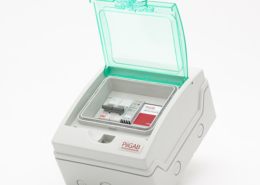 Kapsling på bilden är inkl strömförsörjningskit. Kan beställas både med och utan.
Kapsling för PiiGAB HAN-P1 Converter - IP65 - 200x159mm
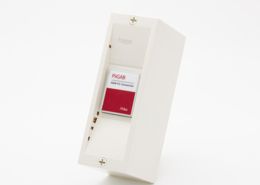
Kapsling för PiiGAB HAN-P1 Converter - IP30 - 160x55mm
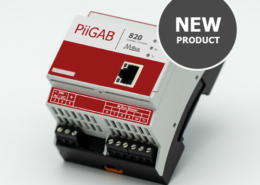
PiiGAB 820 - Extender / Converter / Repeater
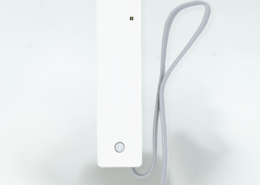
HAN-P1 Converter - Wireless M-Bus

PiiGAB 900T M-Bus / wM-Bus / LoRa

PiiGAB 900T M-Bus / LoRa

PiiGAB 900T LTE - Wired & Wireless M-Bus with LTE communication

PiiGAB 900T - Wired M-Bus

PiiGAB 900S - Wired M-Bus

PiiGAB HAN-P1 Converter - Trådad M-Bus

Enclosure of gateway

M-Bus to Wireless Converter

PiiGAB 900T - Wired / Wireless M-Bus

PiiGAB 900S - Wired / Wireless M-Bus

PiiGAB 810, M-Bus converter
Combining LoRaWAN and M-Bus in a single gateway provides property owners and managers with a flexible, scalable and cost-effective solution
LoRaWAN works by sending data from sensors via gateways to a central cloud platform where the information can be processed and analysed.

